The Human Touch: How Small Elderly Care Houses Transform Assisted Living
Business Name: BeeHive Homes of Volcano Cliffs
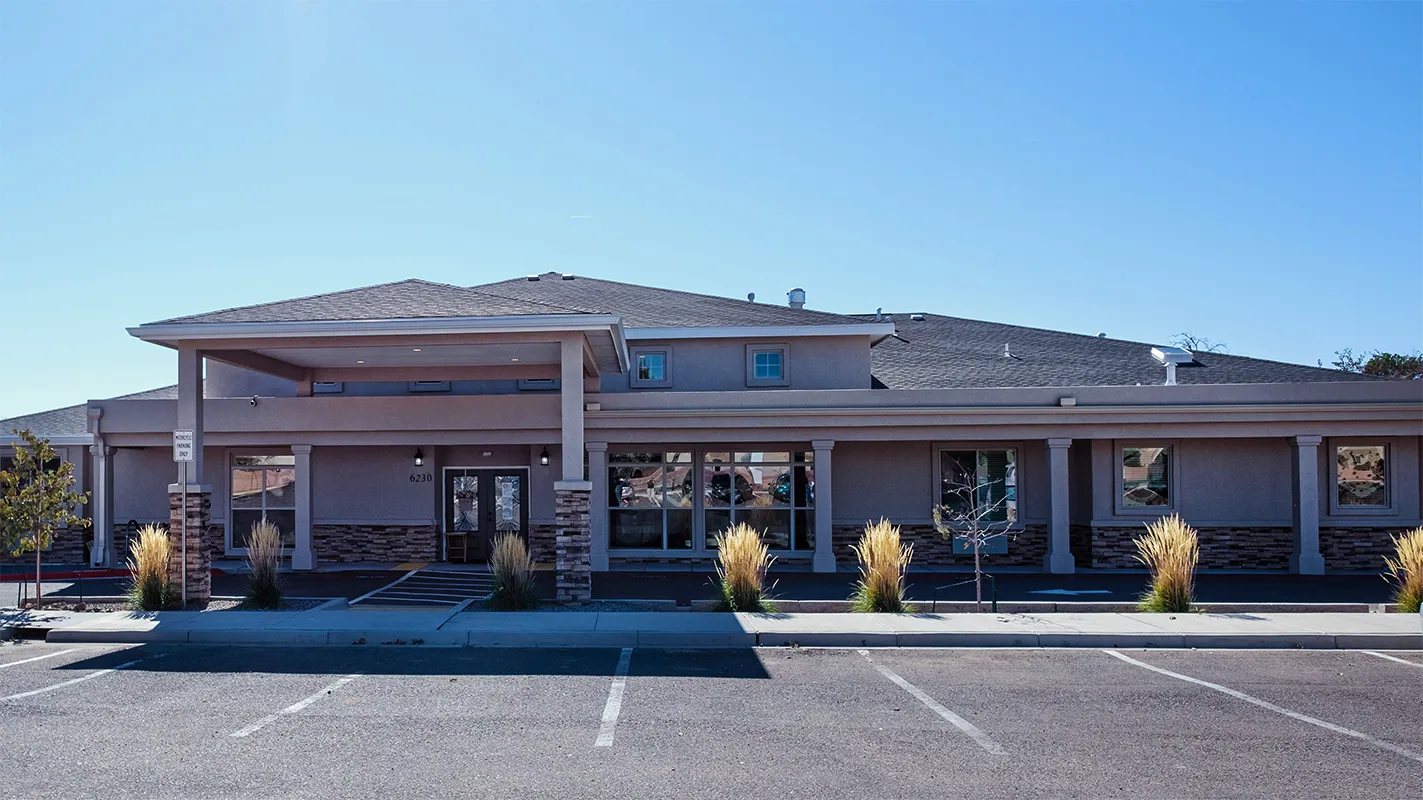
Address: 6230 Montaño Rd NW, Albuquerque, NM 87120
Phone: (505) 302-1919
BeeHive Homes of Volcano Cliffs
At BeeHive Homes of Volcano Cliffs, New Mexico, we offer the finest assisted living experience available in a cozy, comfortable homelike setting. Each of our residents has their own spacious room with an ADA approved bathroom and shower. We prepare and serve delicious home-cooked meals three times a day every day. We maintain a small, friendly elderly care community. We provide regular activities that our residents find fun and contribute to their health and well-being. Our staff is attentive and caring and provides assistance with daily activities to our senior living residents in a loving and respectful manner. We would like to invite you to tour and experience our assisted living home and feel the difference.
6230 Montaño Rd NW, Albuquerque, NM 87120
Business Hours
Families generally concern assisted living with blended feelings. Relief that assistance is lastly in sight. Guilt that they can refrain from doing everything themselves. Worry of making the incorrect choice. I have sat at kitchen area tables with daughters who have not slept appropriately in months and partners who feel they are breaking a guarantee. The choice is seldom about logistics alone. It has to do with trust, self-respect, and whether a loved one will be treated as an entire individual rather than a bed to be filled.
That is where small elderly care homes change the conversation.

Large assisted living communities have their location. They can offer a wide range of amenities, on website medical staff, and foreseeable pricing. However in the quieter corners of the senior care world, small homes with 10 to twenty citizens are reshaping what everyday life can feel like in later years. Less like a facility, more like a household that just has actually more support built in.
This is not a romantic dream. It features trade offs, policies, staffing obstacles, and monetary realities. Yet when it works well, the human touch inside a small elderly care home can change assisted living, respite care, and long term elderly care into something gentler and much more personal.
Why size modifications everything
Most people focus on place and cost when they first compare choices for senior care. Size appears like a secondary detail, but it silently affects nearly every other part of life in a care setting.
In a large assisted living complex with eighty or more residents, systems are constructed for effectiveness. Staff work in shifts. Care plans are standardized. Activities are scheduled in huge blocks. Food comes from a commercial kitchen area. That does not instantly suggest poor care, but it does suggest the design depends on structure and throughput.
In a small elderly care home, the scale is totally different. Consider a converted home with twelve homeowners, or a purpose constructed cottage style home with sixteen spaces twisted around a main living and dining space. The personnel know every resident by name, but more notably, they understand how everyone takes their tea, which football group they follow, and what time they naturally get up if nobody rushes them.
The ratio of residents to caretakers tends to be lower. In practice, that might imply one caregiver for 4 to six citizens during the day, rather than one caretaker for 10 or more in a larger setting. Ratios differ by jurisdiction and acuity level, however in my experience the smaller the home, the much easier it is to match staffing to the people instead of to the building.
A smaller environment likewise means less layers in between a household and the person in charge. You are most likely to fulfill the owner or director in the hallway, see them putting coffee, and understand who to call if something feels off. That proximity alters the tone of accountability.
Daily life when the scale is human
Families frequently ask, "What does a typical day appear like here?" They are not just asking about activities. They wish to know whether their mother will be hurried through early morning care or left to worrying in front of a television for 6 hours.
In small homes, the rhythm of the day tends to follow locals rather than a master schedule printed on glossy paper. Breakfast may be drawn out over two hours, with early risers eating first and late sleepers roaming in when they are ready. Personnel can adjust, since they are not serving fifty plates at once.
Laundry is often carried out in a routine family maker where locals can see and participate. Some will fold towels or sort clothing merely because it feels familiar. I remember one retired teacher who insisted on ironing pillowcases. The team could easily have stated no, pointing out security and time, but they made space for it. That small task anchored her, and her agitation decreased noticeably in the afternoons.
Activities in small elderly care homes do not require to be grand to be meaningful. Planting herbs in containers, baking one tray of cookies, or checking out the local paper aloud at the table can be enough. The point is not to captivate assisted living facilities in albuquerque nm residents as if they were hotel visitors. The goal is to keep them participated in normal life.
Meal times are a great litmus test. In a smaller setting, you are most likely to see personnel sitting at the table, eating alongside homeowners, and carefully cueing those who require aid rather than standing over them with a spoon. Individuals talk, joke, grumble about the soup, and ask for seconds. That social material becomes part of care.
The power of familiarity for memory loss
For older adults dealing with dementia, the size and feel of the environment can matter just as much as medication and official therapies.
Large assisted living facilities often overwhelm residents with long corridors, identical doors, and crowded dining rooms. It ends up being simple to get lost or withdraw. Households explain loved ones who invest most of the day in their room because the common areas feel chaotic.
Small elderly care homes naturally restrict the variety of stimuli. Fewer people travel through. Directions like "your space is the 3rd door on the left after the cooking area" really make good sense. Staff have the time to walk with someone rather than simply pointing.
I recall a gentleman with moderate dementia who had stopped working in 3 previous positionings. He roamed, attempted to leave, and became aggressive when redirected. In a small home, with a completely enclosed garden and a front door that needed a discreet keypad, staff let him walk. They learned his loops, joined him for part of each circuit, and used those walks to chat about his years in the navy. His behavior did not magically disappear, however his distress dropped significantly due to the fact that he was no longer being physically blocked in passages he did not recognize.
Familiar regimens likewise decrease anxiety. In huge settings, personnel changes, agency workers, and turning tasks suggest homeowners see many faces. In a small home, the team is tighter. Locals typically know precisely who will help them gown, who cleans their hair, and who brings their evening medication. That predictability can make the difference between cooperation and resistance.
Relationships that go beyond a chart
One of the most substantial advantages of smaller elderly care homes is relational continuity. Care strategies, fall risk assessments, and medication lists are essential, yet they just tell a portion of the story. The rest is kept in human memory: the way somebody grimaces before they are in noticeable pain, the meaning of a specific sigh, the appearance that states "I am scared but I do not wish to say it."
In a small home, the very same caregiver might support a resident for months or years. They witness the slow shifts that are simple to miss out on during a fast end of shift report. I as soon as saw a caretaker stop an associate from increasing a resident's stress and anxiety medication. "Her hands shake more when she is tired," she said. "She was up twice last night since of the thunderstorms. Provide her a nap after lunch and inspect once again." They did, and the shaking subsided. No dose modification was needed.
Those type of nuanced calls are just possible when personnel and citizens genuinely understand each other.
Relationships reach families also. In a big assisted living setting, relatives are encouraged to speak with the nurse or the manager at scheduled times. In small elderly care homes, I have seen caregivers hold a phone next to a resident's ear so a child can say goodnight, or text a quick picture of Dad sitting under a tree, paper in hand. That flow of informal contact constructs trust and provides families a lifeline of peace of mind without waiting on official care conferences.
Respite care in a homelike setting
Respite care is often an afterthought when households prepare for elderly care, yet it can be the tool that keeps a vulnerable home circumstance from collapsing. A brief stay for an older adult gives household caretakers an opportunity to rest, travel, or recover from their own surgery.
In big centers, respite locals sometimes seem like momentary add ons. Staff are discovering their needs from scratch at the exact same time as the resident is attempting to adapt to a new environment. The experience can feel institutional and impersonal.
Small elderly care homes are typically better placed to offer gentle, customized respite care, when they have a job and the right staffing. Due to the fact that the scale is smaller, personnel can invest more time in advance to comprehend a visitor's routines: what time they like to shower, whether they see the news, which chair they gravitate toward. Families can often bring familiar bedding, pictures, or a favorite armchair without interrupting a big system.
One daughter told me she first attempted 3 days of respite for her mother in a small home "just to see if either people could bear it". Her mother returned discussing the pet dog that went to and the stew they had on Sunday. The daughter slept for twelve straight hours that weekend for the very first time in years. That brief stay provided both confidence to consider a longer transition when caregiving in your home became unsafe.
Respite stays likewise let households evaluate the culture of a home from the inside. You see how personnel talk when they do not understand anybody is listening, how they manage locals who decline medication, and what occurs if someone has a fall at 2 a.m. It is far easier to evaluate quality during a genuine stay than throughout a polished daytime tour.
Trade offs and constraints of small homes
Small does not automatically imply better. It implies various, with its own strengths and weaknesses.
Specialized treatment is the very first significant trade off. Large assisted living communities may have on site physical therapy, regular going to professionals, or an attached memory care unit. A small elderly care home usually partners with outside providers. That can work well, but it requires coordination and sometimes more household involvement to ensure visits and follow up happen.
There is also less privacy. Some homeowners enjoy the intimacy of knowing everybody; others prefer a bit of range. In a twelve bed home, an argument at the dining table can feel intense. Personnel should be experienced in conflict resolution and in supporting homeowners who do not naturally get along, since there is no second dining-room to get away to.
Financial structure is another aspect. Small homes often have higher staffing costs per resident, which can translate into greater regular monthly costs compared to mid tier assisted living in high volume centers. At the very same time, they may have less layers of business overhead and marketing expenditures, which can partially offset those expenses. The variation is large, so families need to compare what is in fact included: individual care, medication management, incontinence supplies, transport, and social activities.
Regulatory oversight varies by region. In some jurisdictions, small homes fall under different licensing categories than standard assisted living, such as adult family homes, residential care homes, or board and care. The rules for staffing, nursing oversight, and allowed care tasks can vary. Families need to understand what medical needs can be fulfilled on site and when a hospitalization or transfer to a higher level of care would be required.
Finally, there is capability for development. A resident whose care requirements increase significantly might eventually require a nursing home or proficient nursing center, no matter the setting they begin in. A small home with just one night staff member, for instance, may not have the ability to securely support somebody who needs 2 individual transfers around the clock. A good company will be sincere about these limitations from the beginning.
Signals of a healthy small elderly care home
Choosing any type of senior care is part research, part instinct. Families walk into a home and sense something in the air: tension or ease, focus or fatigue. With small homes, that suspicion is particularly beneficial, since the culture is so visible.
Here is one useful checklist that can help families examine whether a small elderly care home is likely to offer safe, respectful assisted living or respite care:
- Smell and noise: The home smells like food and cleansing items in sensible quantities, not overwhelming deodorizer or consistent urine. Background sound is moderate, with personnel speaking at normal volumes and residents not shouting for extended periods without response.
- Staff existence: Caretakers show up, not hiding in a workplace. When they pass a resident, they make eye contact or offer a short greeting, even if their hands are full.
- Resident engagement: People are doing identifiable activities, even easy ones like reading, folding laundry, or talking. Tv can be on, however it is not the only thing happening all day.
- Transparency: The manager or owner wants to talk about staffing ratios, training, and current regulative examinations. Policies for falls, medical facility transfers, and end of life care are clearly explained.
- Flexibility: The home can describe how they adapt to specific regimens instead of insisting that everyone follows a stiff daily timetable.
Beyond any list, see how personnel discuss residents when they believe you are not actually listening. An expression like "our people" or "our ladies" originating from a place of affection is different from dismissive speak about "feeders" or "wanderers." Language exposes mindset.
Partnering with households instead of changing them
One of the worries I frequently hear is, "If I move Dad into assisted living, will they anticipate me to go back and let them handle everything?" In large centers, families often feel pushed to the sidelines by systems developed for functional efficiency.
Small elderly care homes tend to be more flexible in including households as partners. There is more room to accommodate a child who wishes to keep handling her mother's hair appointments, or a child who chooses to manage all medical decisions directly with the doctor. Staff can document those preferences and integrate them into the care strategy without setting off a bureaucratic chain reaction.
At the same time, limits matter. Good homes secure both residents and relatives from impractical expectations. If a household caregiver demands a complicated medication regimen that the home can not safely manage, management needs to explain why and work toward a feasible alternative. Partnership does not suggest stating yes to whatever. It implies open dialogue and shared respect.
I have seen a few of the most beautiful examples of cooperation in small homes at the end of life. Households bring in preferred blankets, music, or spiritual rituals. Personnel who have actually known the resident for several years sit quietly at the bedside, providing sips of water, a cool fabric, or merely presence. The line between "household" and "staff" softens, and the focus moves to comfort and friendship more than to medical tasks. That is not special to small homes, but the setting frequently makes it easier.
When a small home is not the best fit
Despite the lots of advantages, small elderly care homes are not ideal for each individual or every situation.
Some older adults genuinely enjoy the energy and variety of a large assisted living community. They flourish on big activity calendars, live home entertainment, pool tables, physical fitness classes, and big dining halls. For someone who spent their life in hectic social environments, a small home may feel too quiet.
Clinical intricacy matters also. An individual needing regular suctioning, advanced wound care, ventilator assistance, or complex intravenous treatments is most likely to be better served in an experienced nursing center that is equipped and certified for that level of medical intervention.
Geography can be another restricting aspect. Small homes may not exist in every neighborhood, especially backwoods where regulations and staffing shortages make them tough to sustain. In such cases, a high quality mid sized assisted living with a strong memory care system may be the most realistic option.
There are also personal and cultural preferences. Some households desire clear expert distance in between staff and locals. Others value a more familial feel where everyone hugs and trades stories. A small home usually favors the latter. Checking out at different times of day, and talking frankly with both management and caretakers, is the best method to judge fit.
Making a thoughtful choice
Choosing between different models of senior care is not about discovering a perfect solution. It is about discovering the most gentle, sustainable alternative offered a specific person's needs, finances, history, and values.
Small elderly care homes bring a type of care that is tough to duplicate at bigger scale: constant relationships, flexible regimens, quiet areas, and personnel who have the bandwidth to discover the little things. They can offer assisted living that feels closer to home, respite care that brings back both the older adult and the family caretaker, and long term elderly care fixated self-respect instead of throughput.
They likewise require mindful examination. Families should ask hard questions about staffing, training, medical oversight, and financial stability. A captivating living room and a friendly tour are a beginning point, not a last judgment.
For many older grownups, the final years of life are formed more by daily details than by remarkable interventions. Whether somebody gets up when they pick, whether a familiar voice answers when they call out in the evening, whether their stories are heard and remembered, whether their final weeks are spent in turmoil or calm. Small homes can not ensure perfection, but when attentively run, they produce the conditions where that human touch is more likely.
That is the quiet change happening throughout pockets of assisted living and senior care: not larger buildings or flashier amenities, but smaller, steadier locations where people still understand one another by name, and where care looks a lot like ordinary life, supported instead of replaced.
BeeHive Homes of Volcano Cliffs provides assisted living care
BeeHive Homes of Volcano Cliffs provides respite care services
BeeHive Homes of Volcano Cliffs supports assistance with bathing and grooming
BeeHive Homes of Volcano Cliffs offers private bedrooms with private bathrooms
BeeHive Homes of Volcano Cliffs provides medication monitoring and documentation
BeeHive Homes of Volcano Cliffs serves dietitian-approved meals
BeeHive Homes of Volcano Cliffs provides housekeeping services
BeeHive Homes of Volcano Cliffs provides laundry services
BeeHive Homes of Volcano Cliffs offers community dining and social engagement activities
BeeHive Homes of Volcano Cliffs features life enrichment activities
BeeHive Homes of Volcano Cliffs supports personal care assistance during meals and daily routines
BeeHive Homes of Volcano Cliffs promotes frequent physical and mental exercise opportunities
BeeHive Homes of Volcano Cliffs provides a home-like residential environment
BeeHive Homes of Volcano Cliffs creates customized care plans as residents’ needs change
BeeHive Homes of Volcano Cliffs assesses individual resident care needs
BeeHive Homes of Volcano Cliffs accepts private pay and long-term care insurance
BeeHive Homes of Volcano Cliffs assists qualified veterans with Aid and Attendance benefits
BeeHive Homes of Volcano Cliffs encourages meaningful resident-to-staff relationships
BeeHive Homes of Volcano Cliffs delivers compassionate, attentive senior care focused on dignity and comfort
BeeHive Homes of Volcano Cliffs has a phone number of (505) 302-1919
BeeHive Homes of Volcano Cliffs has an address of 6230 Montaño Rd NW, Albuquerque, NM 87120
BeeHive Homes of Volcano Cliffs has a website https://beehivehomes.com/locations/volcano-cliffs/
BeeHive Homes of Volcano Cliffs has Google Maps listing https://maps.app.goo.gl/vC78eXZrUYuJ298v9
BeeHive Homes of Volcano Cliffs has Instagram page https://www.instagram.com/beehivealbuquerquewest
BeeHive Homes of Volcano Cliffs has an TikTok page https://www.tiktok.com/@beehivehomesalbuq
BeeHive Homes of Volcano Cliffs won Top Assisted Living Homes 2026
BeeHive Homes of Volcano Cliffs earned Best Customer Service Award 2025
BeeHive Homes of Volcano Cliffs placed 1st for Senior Living Communities 2026
People Also Ask about BeeHive Homes of Volcano Cliffs
What is BeeHive Homes of Volcano Cliffs Living monthly room rate?
Our base rate is $7,100 per month. We do an assessment of each resident's needs upon move-in, so each resident's rate may be slightly higher. However, there are no add-ons or hidden fees. We also charge a one-time community fee of $2,000 at move-in
Does Medicare or Medicaid pay for a stay at Bee Hive Homes?
Medicare pays for hospital and nursing home stays, but does not pay for assisted living. Some assisted living facilities are Medicaid providers, but we are not. We do accept private pay, long-term care insurance, and we can assist qualified Veterans with approval for the Aid and Attendance program
Do we have a nurse on staff?
We do have a nurse on contract who is available as a resource to our staff but our residents' needs do not require a nurse on-site. We always have trained caregivers in the home and awake around the clock
What can you tell me about the food at Bee Hive?
You have to smell it and taste it to believe it! We use dietitian-approved meals with alternates for flexibility, and we can accommodate needs for different texture and therapeutic diets. We have found that most physicians are happy to relax diet restrictions without any negative effect on our residents
Do we allow pets?
We do allow small pets as long as the resident is able to care for them. State regulations also require that we have evidence of current immunizations for any required shots
Where is BeeHive Homes of Volcano Cliffs located?
BeeHive Homes of Volcano Cliffs is conveniently located at 6230 Montaño Rd NW, Albuquerque, NM 87120. You can easily find directions on Google Maps or call at (505) 302-1919 Monday through Sunday 10:00am to 7:00pm
How can I contact BeeHive Homes of Volcano Cliffs?
You can contact BeeHive Homes of Volcano Cliffs by phone at: (505) 302-1919, visit their website at https://beehivehomes.com/locations/volcano-cliffs/ or connect on social media via Instagram Facebook or TikTok
Santa Fe Village Park provides a relaxing outdoor destination where families connected with Assisted living memory care senior care elderly care and respite care can spend meaningful time together.